Awards

Case Study

General

Media

News

Recruitment

Sponsorship

Gold Coast Boxer Tolga Eden Claims Victory at Superordinary Brisbane

Gold Coast Boxer Tolga Eden Claims Victory at Superordinary Brisbane

Luke Hemmings

Luke Hemmings

5

5

min read

min read
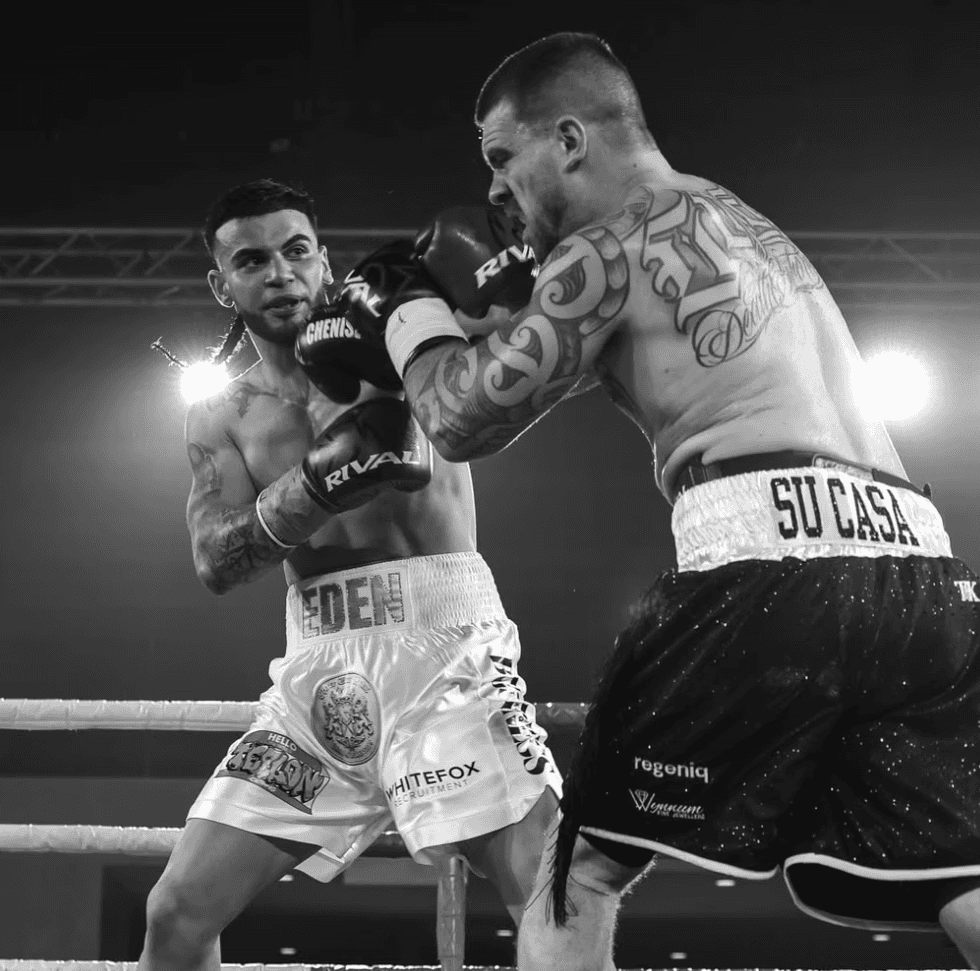
Whitefox Recruitment is proud to congratulate rising local boxing talent Tolga Eden following his win at Superordinary Brisbane on 6 June.

As a major sponsor of Tolga, Whitefox Recruitment was proud to stand behind him as he stepped into the ring and delivered a result that reflected far more than one night of competition.

At just 18 years old, Tolga represents the type of local ambition Whitefox Recruitment believes should be backed early. He is building his name in the ring, developing his craft as a barber, and preparing to open his own barber shop, RTB Blendz, in Burleigh Heads.

For Whitefox Recruitment, becoming a major sponsor of Tolga was never about simply placing a logo beside a fight night. It was about backing a young local operator already showing the habits that build a future, consistency, resilience, pride in his work, commitment to his craft and the discipline to keep showing up when the work is hard and the outcome is not guaranteed.

On 6 June, that work showed.

Tolga stepped into the ring at Superordinary Brisbane and came away with the win. But the result itself is only part of the story. The bigger story is what it represents, preparation, sacrifice, focus and the ability to perform when the pressure is real.

Tolga’s story deserves attention because it reflects something bigger than one fight. He is part of a generation of young South East Queensland talent not waiting for opportunity to be handed to them. He is working, training, learning, building and now taking the next major step in business by preparing to open his own barber shop.

Boxing and barbering may look like different worlds, but the principles are closely aligned. Detail matters. Repetition matters. Composure matters. Trust is built through consistency. You sharpen your craft every day. And when it is time to perform, there is nowhere to hide.

In the barbershop, the standard is visible in the finish. In the ring, the standard is visible under pressure. In business, the standard is visible in whether people trust you enough to come back, refer others and believe in what you are building.

Whitefox Recruitment’s Managing Director, Luke Hemmings, said becoming a major sponsor of Tolga was an easy decision because his story reflects the kind of young South East Queensland talent the firm believes deserves recognition.

“Tolga is 18 years old, has built his craft as a barber, is preparing to open his own barber shop in Burleigh Heads and has now stepped out of Superordinary Brisbane with a win. That tells you a lot about his character,” Mr Hemmings said.

“He is not waiting for life to happen. He is building something. He is working, training, learning his craft, taking risks and putting himself in positions where he has to perform. That is the kind of discipline we respect at Whitefox Recruitment.”

The sponsorship reflects Whitefox Recruitment’s broader commitment to backing local talent across the Gold Coast, Brisbane and wider South East Queensland community. The region continues to produce driven young people across sport, business, trades, hospitality, professional services and creative industries, but potential needs more than praise. It needs belief, support and opportunity.

Whitefox Recruitment believes local businesses have an important role to play in backing young people who are prepared to work hard, take risks and represent the region with pride. Talent is important, but talent alone is rarely enough. The people who go furthest are usually the ones who combine ability with discipline, consistency and the willingness to keep showing up before the results are obvious.

Mr Hemmings said the connection between boxing, business and career building is clear.

“The fight is rarely won on the night. It is won in the preparation, the repetition, the sacrifice and the ability to keep showing up when nobody is watching,” he said.

“That is the same in business. It is the same in recruitment. It is the same in learning a trade or building a career. Everyone sees the outcome, but very few people see the work that created it.”

At 18, Tolga’s win at Superordinary Brisbane represents more than a result. It represents the mindset of a young person prepared to work, prepare, build a business and step into pressure with purpose.

“Tolga stepped into the ring with the kind of courage most people never have to test, and he delivered,” Mr Hemmings said.

“We are proud to have been a major sponsor of Tolga, proud to back local sport, proud to support a young local barber preparing to open his own shop in Burleigh Heads, and proud to stand behind South East Queensland talent that is prepared to chase something bigger.”

Whitefox Recruitment congratulates Tolga Eden on his win at Superordinary Brisbane on 6 June and looks forward to seeing what comes next, both in the ring and through RTB Blendz in Burleigh Heads.


Share to:

Recent Insight

News

Sponsorship

Gold Coast Boxer Tolga Eden Claims Victory at Superordinary Brisbane

Whitefox Recruitment is proud to congratulate rising local boxing talent Tolga Eden following his win at Superordinary Brisbane on 6 June.

As a major sponsor of Tolga, Whitefox Recruitment was proud to stand behind him as he stepped into the ring and delivered a result that reflected far more than one night of competition.

At just 18 years old, Tolga represents the type of local ambition Whitefox Recruitment believes should be backed early. He is building his name in the ring, developing his craft as a barber, and preparing to open his own barber shop, RTB Blendz, in Burleigh Heads.

For Whitefox Recruitment, becoming a major sponsor of Tolga was never about simply placing a logo beside a fight night. It was about backing a young local operator already showing the habits that build a future, consistency, resilience, pride in his work, commitment to his craft and the discipline to keep showing up when the work is hard and the outcome is not guaranteed.

On 6 June, that work showed.

Tolga stepped into the ring at Superordinary Brisbane and came away with the win. But the result itself is only part of the story. The bigger story is what it represents, preparation, sacrifice, focus and the ability to perform when the pressure is real.

Tolga’s story deserves attention because it reflects something bigger than one fight. He is part of a generation of young South East Queensland talent not waiting for opportunity to be handed to them. He is working, training, learning, building and now taking the next major step in business by preparing to open his own barber shop.

Boxing and barbering may look like different worlds, but the principles are closely aligned. Detail matters. Repetition matters. Composure matters. Trust is built through consistency. You sharpen your craft every day. And when it is time to perform, there is nowhere to hide.

In the barbershop, the standard is visible in the finish. In the ring, the standard is visible under pressure. In business, the standard is visible in whether people trust you enough to come back, refer others and believe in what you are building.

Whitefox Recruitment’s Managing Director, Luke Hemmings, said becoming a major sponsor of Tolga was an easy decision because his story reflects the kind of young South East Queensland talent the firm believes deserves recognition.

“Tolga is 18 years old, has built his craft as a barber, is preparing to open his own barber shop in Burleigh Heads and has now stepped out of Superordinary Brisbane with a win. That tells you a lot about his character,” Mr Hemmings said.

“He is not waiting for life to happen. He is building something. He is working, training, learning his craft, taking risks and putting himself in positions where he has to perform. That is the kind of discipline we respect at Whitefox Recruitment.”

The sponsorship reflects Whitefox Recruitment’s broader commitment to backing local talent across the Gold Coast, Brisbane and wider South East Queensland community. The region continues to produce driven young people across sport, business, trades, hospitality, professional services and creative industries, but potential needs more than praise. It needs belief, support and opportunity.

Whitefox Recruitment believes local businesses have an important role to play in backing young people who are prepared to work hard, take risks and represent the region with pride. Talent is important, but talent alone is rarely enough. The people who go furthest are usually the ones who combine ability with discipline, consistency and the willingness to keep showing up before the results are obvious.

Mr Hemmings said the connection between boxing, business and career building is clear.

“The fight is rarely won on the night. It is won in the preparation, the repetition, the sacrifice and the ability to keep showing up when nobody is watching,” he said.

“That is the same in business. It is the same in recruitment. It is the same in learning a trade or building a career. Everyone sees the outcome, but very few people see the work that created it.”

At 18, Tolga’s win at Superordinary Brisbane represents more than a result. It represents the mindset of a young person prepared to work, prepare, build a business and step into pressure with purpose.

“Tolga stepped into the ring with the kind of courage most people never have to test, and he delivered,” Mr Hemmings said.

“We are proud to have been a major sponsor of Tolga, proud to back local sport, proud to support a young local barber preparing to open his own shop in Burleigh Heads, and proud to stand behind South East Queensland talent that is prepared to chase something bigger.”

Whitefox Recruitment congratulates Tolga Eden on his win at Superordinary Brisbane on 6 June and looks forward to seeing what comes next, both in the ring and through RTB Blendz in Burleigh Heads.

5

Min Read

Posted by

Luke Hemmings

News

Sponsorship

Gold Coast Boxer Tolga Eden Claims Victory at Superordinary Brisbane

Whitefox Recruitment is proud to congratulate rising local boxing talent Tolga Eden following his win at Superordinary Brisbane on 6 June.

As a major sponsor of Tolga, Whitefox Recruitment was proud to stand behind him as he stepped into the ring and delivered a result that reflected far more than one night of competition.

At just 18 years old, Tolga represents the type of local ambition Whitefox Recruitment believes should be backed early. He is building his name in the ring, developing his craft as a barber, and preparing to open his own barber shop, RTB Blendz, in Burleigh Heads.

For Whitefox Recruitment, becoming a major sponsor of Tolga was never about simply placing a logo beside a fight night. It was about backing a young local operator already showing the habits that build a future, consistency, resilience, pride in his work, commitment to his craft and the discipline to keep showing up when the work is hard and the outcome is not guaranteed.

On 6 June, that work showed.

Tolga stepped into the ring at Superordinary Brisbane and came away with the win. But the result itself is only part of the story. The bigger story is what it represents, preparation, sacrifice, focus and the ability to perform when the pressure is real.

Tolga’s story deserves attention because it reflects something bigger than one fight. He is part of a generation of young South East Queensland talent not waiting for opportunity to be handed to them. He is working, training, learning, building and now taking the next major step in business by preparing to open his own barber shop.

Boxing and barbering may look like different worlds, but the principles are closely aligned. Detail matters. Repetition matters. Composure matters. Trust is built through consistency. You sharpen your craft every day. And when it is time to perform, there is nowhere to hide.

In the barbershop, the standard is visible in the finish. In the ring, the standard is visible under pressure. In business, the standard is visible in whether people trust you enough to come back, refer others and believe in what you are building.

Whitefox Recruitment’s Managing Director, Luke Hemmings, said becoming a major sponsor of Tolga was an easy decision because his story reflects the kind of young South East Queensland talent the firm believes deserves recognition.

“Tolga is 18 years old, has built his craft as a barber, is preparing to open his own barber shop in Burleigh Heads and has now stepped out of Superordinary Brisbane with a win. That tells you a lot about his character,” Mr Hemmings said.

“He is not waiting for life to happen. He is building something. He is working, training, learning his craft, taking risks and putting himself in positions where he has to perform. That is the kind of discipline we respect at Whitefox Recruitment.”

The sponsorship reflects Whitefox Recruitment’s broader commitment to backing local talent across the Gold Coast, Brisbane and wider South East Queensland community. The region continues to produce driven young people across sport, business, trades, hospitality, professional services and creative industries, but potential needs more than praise. It needs belief, support and opportunity.

Whitefox Recruitment believes local businesses have an important role to play in backing young people who are prepared to work hard, take risks and represent the region with pride. Talent is important, but talent alone is rarely enough. The people who go furthest are usually the ones who combine ability with discipline, consistency and the willingness to keep showing up before the results are obvious.

Mr Hemmings said the connection between boxing, business and career building is clear.

“The fight is rarely won on the night. It is won in the preparation, the repetition, the sacrifice and the ability to keep showing up when nobody is watching,” he said.

“That is the same in business. It is the same in recruitment. It is the same in learning a trade or building a career. Everyone sees the outcome, but very few people see the work that created it.”

At 18, Tolga’s win at Superordinary Brisbane represents more than a result. It represents the mindset of a young person prepared to work, prepare, build a business and step into pressure with purpose.

“Tolga stepped into the ring with the kind of courage most people never have to test, and he delivered,” Mr Hemmings said.

“We are proud to have been a major sponsor of Tolga, proud to back local sport, proud to support a young local barber preparing to open his own shop in Burleigh Heads, and proud to stand behind South East Queensland talent that is prepared to chase something bigger.”

Whitefox Recruitment congratulates Tolga Eden on his win at Superordinary Brisbane on 6 June and looks forward to seeing what comes next, both in the ring and through RTB Blendz in Burleigh Heads.

5

Min Read

Posted by

Luke Hemmings

News

Recruitment

General

Why Whitefox Recruitment Is Moving Away From Traditional Social Media

Whitefox Recruitment has made a deliberate and material decision to move away from traditional social media platforms such as Instagram, Facebook and TikTok, and shift its primary digital focus to LinkedIn. This is not because those platforms have no value. They do. However, value and relevance are not the same thing. The next phase of Whitefox Recruitment requires a sharper platform, a more commercially aligned audience and a communication strategy built around authority, not attention.

For years, businesses have been told they need to be everywhere online. Instagram, Facebook, TikTok, reels, stories, short-form video, daily posting and constant visibility have become the default expectation. The assumption has been simple: if a business is not active on every platform, it is somehow falling behind. Whitefox Recruitment does not accept that view. The stronger question is not whether a business is visible. The stronger question is whether its visibility is reaching the right people, in the right environment, for the right commercial reason.

The uncomfortable truth is that many businesses confuse online activity with market authority. A busy feed does not automatically create trust. A viral post does not necessarily build credibility. A high view count does not mean the right decision-makers are paying attention. In many cases, traditional social media can become noise dressed up as marketing. It can create movement without meaning, content without conversion and visibility without commercial weight.

Whitefox Recruitment is not stepping back from digital. It is stepping away from noise.

Recruitment is not entertainment. It is not a trend cycle, a popularity contest or an exercise in feeding an algorithm. Recruitment affects careers, companies, leadership teams, culture, revenue and long-term business performance. A strong hire can lift pressure inside a business, protect momentum and raise internal standards. A poor hire can cost time, money, morale, client experience and commercial confidence. That is why the platform matters.

Traditional social media can humanise a brand. It can show personality. It can build recognition. It can keep a business visible in the market. However, visibility without commercial relevance has limited value. A recruitment firm does not win meaningful client trust simply because it posts frequently. It wins trust because the market believes it understands people, timing, pressure, salary movement, candidate behaviour and hiring risk.

That is the distinction Whitefox Recruitment is now leaning into. The business has always believed in brand. It has invested heavily in market presence, storytelling, visibility and positioning. It has built one of the most recognised recruitment brands in the Gold Coast market by being prepared to move differently. However, the business has matured, the market has matured, and the digital strategy now needs to mature with it.

Whitefox Recruitment has not arrived at this decision because it failed to understand traditional visibility. Quite the opposite. The firm has already proven the impact that bold market presence can create when executed properly. Across 2023 and 2024, Whitefox Recruitment became the only recruitment agency on the Gold Coast to execute a major brand activation of its kind, wrapping a fleet of 12 buses across the region from Oxenford to Tweed Heads.

The campaign was supported by major billboard placements across some of the city’s most visible corridors, including the Gold Coast Highway, Bundall Road, Brisbane Road, Marine Parade and Ferry Road. That campaign placed Whitefox Recruitment across the physical movement of the city, not tucked away inside a feed competing for attention against trends, commentary and disposable content.

The firm also became the only recruitment agency in the history of Gold Coast Airport to complete a major takeover of the three baggage carousel full-length wall screens. That placed the Whitefox Recruitment brand directly in front of one of the highest-volume captive audiences in the region, including employers, executives, business owners, professionals, candidates, tourists, interstate decision-makers and returning locals.

That exposure matters because Gold Coast Airport is not just an airport. It is one of the key gateways into the region. Gold Coast Airport says it connects more than six million travellers each year, and in April 2026 the airport recorded its busiest April in history, with 570,703 passengers travelling through the terminal. That was 41,606 more passengers than the same period the year prior, and it surpassed the previous April record set in 2018. The busiest day was 19 April, the final day of the school holidays, when more than 22,400 passengers passed through the terminal.

That means Whitefox Recruitment was not simply running airport advertising. It was positioning the brand in a premium, high-trust, high-volume environment at the point where people enter the Gold Coast. While the exact number of individual viewers depends on campaign duration, passenger movement and flight volume during the activation period, the scale of the environment is clear. A full baggage carousel takeover inside an airport moving more than half a million passengers in April 2026 alone had the potential to generate significant repeated exposure in a setting most recruitment agencies never enter.

That matters because Whitefox Recruitment has already done what many agencies never will. It has invested in scale. It has taken the brand offline. It has put recruitment into spaces normally reserved for property groups, tourism brands, national retailers and major corporates. It has shown that a recruitment firm can command serious market presence when it has the confidence and commercial reason to do so.

This is why the move away from traditional social media should not be mistaken for the firm becoming quieter. Whitefox Recruitment knows how to create attention. The next phase is about turning that attention into authority.

It is also about moving into a more impactful marketing model. That means fewer low-value posts designed only to keep a feed alive, and more strategic activity that carries weight in the market. It means choosing platforms, placements and campaigns based on commercial impact, not habit. It means using marketing to support trust, lead generation, candidate attraction, client confidence and long-term brand authority.

It also means investing further into video, but not generic video for the sake of content volume. Whitefox Recruitment’s next phase of videography will be more cinematic, more intentional and more aligned with the standard of the brand. The focus will not be on disposable clips, recycled trends or low-value social content. It will be on premium storytelling, stronger visual identity, sharper founder-led commentary, market-facing insights and content that feels closer to a brand film than a social media obligation.

This is important because video still matters. In fact, it matters more when it is done properly. The issue is not video itself. The issue is generic video. The market does not need another recruitment agency posting the same desk shots, coffee clips, office walk-throughs or trend-based reels. Whitefox Recruitment’s direction is different. The firm is moving towards cinematography that captures the business with more depth, more polish and more commercial intent.

The next stage of Whitefox Recruitment’s content strategy will therefore sit across three stronger pillars: LinkedIn as the primary professional platform, high-impact brand activations that place the business in premium market environments, and cinematic videography that strengthens the firm’s authority, story and market position.

LinkedIn is where the serious recruitment conversation now belongs. It is where business owners, executives, managers and professionals are already thinking about hiring, workforce pressure, leadership, career movement, market conditions and commercial decisions. It is where employers observe who actually understands the market. It is where candidates assess who they would trust with their next move. It is where professional credibility is built, tested and remembered.

For Whitefox Recruitment, LinkedIn is not simply another social media platform. It is the most commercially relevant platform for the type of recruitment business the firm is becoming. Whitefox Recruitment is moving deeper into principal-led search, candidate representation and advisory-led hiring. That means more market intelligence, more passive candidate engagement, more strategic client conversations and a stronger focus on long-term hiring outcomes.

This change also reflects the deeper shift taking place inside Whitefox Recruitment. The firm is continuing to move away from a volume-based recruitment model and further into deliberate search, candidate representation and talent advisory. That distinction matters. A volume-based agency is often built around advertising roles, collecting applications, screening large numbers of CVs and moving quickly through a transactional process. Whitefox Recruitment’s direction is different.

The firm is increasingly focused on identifying the right people, not simply processing more people. That means deeper market mapping, passive candidate engagement, targeted search, stronger briefing, sharper candidate positioning and more strategic conversations with employers about what they actually need before going to market.

In that model, traditional social media plays a different role. It may support awareness, but it does not sit at the centre of trust. A deliberate search and talent advisory firm needs to be visible where professional credibility is built, where business leaders pay attention and where candidates think seriously about career movement. That is why LinkedIn is now the primary platform.

This is also why Whitefox Recruitment’s content is changing. The firm is not trying to win a volume game. It is not trying to produce endless posts for the sake of staying present. It is building a more considered content strategy that reflects the work it is actually doing: advising employers, reading the market, identifying passive talent, representing candidates properly and helping businesses make better hiring decisions.

The future of Whitefox Recruitment is not about being louder. It is about being more precise.

Whitefox Recruitment has never built its reputation by following the industry. It has built its reputation by staying in its own lane, understanding its market and making decisions based on where the business is going, not where the industry expects it to stand.

That approach has earned the firm credibility year after year across the past six years. Whitefox Recruitment has continued to be recognised for its brand, service, market presence and recruitment outcomes because it has not tried to operate like every other agency. It has moved differently, invested differently and communicated differently.

In 2026, that approach was further recognised when Whitefox Recruitment secured the number one position in Best of the Gold Coast Recruitment Firms. For the firm, that recognition did not come from chasing industry trends. It came from building a brand with local presence, commercial conviction and a clear understanding of the market it serves.

The strongest candidates are rarely sitting online waiting for a job advertisement. They are usually already employed, performing well and not actively looking. They are not scrolling traditional social media hoping a generic job post appears in front of them. They need to be identified. They need to be approached properly. They need to be engaged with context. They need to be represented with care.

That is the difference between advertising and search. Advertising waits for the market to come to you. Search goes into the market and finds the right person. Whitefox Recruitment is placing more focus on the latter.

This is why the shift to LinkedIn matters. LinkedIn allows Whitefox Recruitment to speak directly to employers making hiring decisions, candidates considering career movement and business leaders who understand that talent is not an administrative function. It is a commercial lever. It allows the firm to publish market updates, hiring insights, candidate trends, salary observations, role-specific intelligence, leadership commentary and honest recruitment advice from the front line.

Not content for the sake of an algorithm. Content for the people actually making decisions.

Whitefox Recruitment Managing Director, Luke Hemmings, said the move was about becoming sharper, not quieter.

“The market does not need more noise. It needs more clarity. We are not interested in posting for the sake of posting. We want our content to help employers understand what is happening in the market, what candidates are responding to and how hiring behaviour is changing.”

Mr Hemmings said recruitment firms needed to stop confusing attention with authority.

“A recruitment firm can be visible online and still have no real influence in the market. The question is not whether people have seen your content. The question is whether the right people trust your judgement when a hiring decision matters.”

He said LinkedIn was better aligned with the next phase of Whitefox Recruitment.

“Our business is becoming more advisory-led. We are having more serious conversations with employers about talent strategy, candidate attraction, passive search, retention risk, salary expectations and market positioning. LinkedIn is where that level of conversation belongs.”

Mr Hemmings said the decision also reflected the firm’s move into more impactful marketing.

“We have already shown the market that Whitefox Recruitment can create attention at scale. We have wrapped buses, taken over major road corridors and put the brand inside Gold Coast Airport in a way recruitment agencies simply do not do. The next stage is not about doing less marketing. It is about doing more meaningful marketing. More impact, more authority and more commercial relevance.”

He said video would remain an important part of the firm’s strategy, but with a higher standard.

“Video still matters, but generic video does not move the market. Our next phase is about cinematic storytelling, stronger visual identity and content that actually reflects the level of the brand. We are not interested in producing content just to keep a feed alive. We want content that has weight, polish and commercial purpose.”

Mr Hemmings said the firm’s move away from traditional social media also reflects its broader evolution away from volume-based recruitment.

“We are not building Whitefox Recruitment to be a volume agency. We are building a deliberate search and talent advisory firm. That means our marketing has to reflect the level of the work. We are advising clients, mapping markets, approaching passive candidates and representing people properly. LinkedIn is far better aligned with that direction than platforms built mainly around entertainment and short attention spans.”

He said Whitefox Recruitment’s growth had never come from following the rest of the industry.

“We do not follow the industry. We follow our lane. That is what has built credibility year after year across the past six years. We have made decisions that made sense for our market, our clients and our candidates, not decisions designed to look like everyone else. Being recognised as number one in the Best of the Gold Coast Recruitment Firms in 2026 reinforces that the market respects a firm prepared to lead differently.”

That is the key distinction. Whitefox Recruitment is not moving away from traditional social media because it has stopped believing in brand. It is moving because it believes brand should serve the business, not distract from it. Brand should create trust, not simply attention. It should support commercial conversations, not chase vanity metrics. It should position the firm as a serious operator in the recruitment market, not just another business trying to stay visible online.

There is a material difference between brand awareness and brand authority. Brand awareness means people know your name. Brand authority means people trust your judgement. Whitefox Recruitment has already built strong awareness across the Gold Coast and the broader markets it serves. The next phase is about deepening authority, sharpening its voice and putting its insights where they carry the most commercial weight.

That requires discipline. It means resisting the pressure to be everywhere. It means saying less where the audience is not commercially aligned and saying more where the conversation matters. It means choosing relevance over reach. It means choosing substance over noise. It means understanding that not every platform deserves equal attention simply because it exists.

For employers, this shift means Whitefox Recruitment’s commentary will become more practical, more direct and more useful. The firm will continue to speak honestly about hiring conditions, candidate behaviour, salary pressure, market movement, weak recruitment processes and the standards required to secure strong people. It will use LinkedIn to give employers a clearer view of what is actually happening in the market, not just what sounds polished in theory.

For candidates, it means clearer insight into what employers are looking for, how the market is moving and how to position themselves properly when considering a career move. It means more considered commentary around representation, career timing, presentation, salary expectations and the difference between simply applying for a job and being properly positioned for an opportunity.

The practical reality is that recruitment has moved beyond simple job posting. Employers do not just need applicants. They need the right people. Candidates do not just need job ads. They need proper representation. Both sides need a recruitment partner who understands timing, positioning, communication and market context.

That is where LinkedIn becomes more than a platform. It becomes a professional marketplace of trust.

Instagram, Facebook and TikTok may still have a place from time to time. They can support personality, community presence and broader brand visibility. They can show the human side of a business. They can help people understand the energy behind the brand. However, they will no longer sit at the centre of Whitefox Recruitment’s strategy.

The centre is now LinkedIn.

This is not a soft brand pivot. It is a strategic decision.

The recruitment market is not short of content. It is short of useful commentary. It is short of recruitment firms prepared to say what they are actually seeing, not just what sounds good online. It is short of operators willing to move beyond vanity metrics and focus on what actually matters: better hiring outcomes, stronger candidate representation and more informed business decisions.

Whitefox Recruitment’s next digital phase will not be driven by chasing every platform, every trend or every algorithm. It will be driven by clarity, credibility and market intelligence. It will be built around the conversations that matter most to employers, candidates and the broader business community.

The old social media playbook is not broken for every business, but it is no longer the right centre of gravity for Whitefox Recruitment.

The next phase will not reward businesses that simply post more. It will reward those that say something worth listening to. It will reward clarity over noise, authority over attention and commercial relevance over empty reach.

Whitefox Recruitment is not stepping back from digital. It is stepping into a sharper version of it.

More relevance. More authority. More commercial value. More impactful marketing.

That is where the recruitment industry is heading.

And that is where Whitefox Recruitment intends to lead.

5

Min Read

Posted by

Luke Hemmings

News

Recruitment

General

Why Whitefox Recruitment Is Moving Away From Traditional Social Media

Whitefox Recruitment has made a deliberate and material decision to move away from traditional social media platforms such as Instagram, Facebook and TikTok, and shift its primary digital focus to LinkedIn. This is not because those platforms have no value. They do. However, value and relevance are not the same thing. The next phase of Whitefox Recruitment requires a sharper platform, a more commercially aligned audience and a communication strategy built around authority, not attention.

For years, businesses have been told they need to be everywhere online. Instagram, Facebook, TikTok, reels, stories, short-form video, daily posting and constant visibility have become the default expectation. The assumption has been simple: if a business is not active on every platform, it is somehow falling behind. Whitefox Recruitment does not accept that view. The stronger question is not whether a business is visible. The stronger question is whether its visibility is reaching the right people, in the right environment, for the right commercial reason.

The uncomfortable truth is that many businesses confuse online activity with market authority. A busy feed does not automatically create trust. A viral post does not necessarily build credibility. A high view count does not mean the right decision-makers are paying attention. In many cases, traditional social media can become noise dressed up as marketing. It can create movement without meaning, content without conversion and visibility without commercial weight.

Whitefox Recruitment is not stepping back from digital. It is stepping away from noise.

Recruitment is not entertainment. It is not a trend cycle, a popularity contest or an exercise in feeding an algorithm. Recruitment affects careers, companies, leadership teams, culture, revenue and long-term business performance. A strong hire can lift pressure inside a business, protect momentum and raise internal standards. A poor hire can cost time, money, morale, client experience and commercial confidence. That is why the platform matters.

Traditional social media can humanise a brand. It can show personality. It can build recognition. It can keep a business visible in the market. However, visibility without commercial relevance has limited value. A recruitment firm does not win meaningful client trust simply because it posts frequently. It wins trust because the market believes it understands people, timing, pressure, salary movement, candidate behaviour and hiring risk.

That is the distinction Whitefox Recruitment is now leaning into. The business has always believed in brand. It has invested heavily in market presence, storytelling, visibility and positioning. It has built one of the most recognised recruitment brands in the Gold Coast market by being prepared to move differently. However, the business has matured, the market has matured, and the digital strategy now needs to mature with it.

Whitefox Recruitment has not arrived at this decision because it failed to understand traditional visibility. Quite the opposite. The firm has already proven the impact that bold market presence can create when executed properly. Across 2023 and 2024, Whitefox Recruitment became the only recruitment agency on the Gold Coast to execute a major brand activation of its kind, wrapping a fleet of 12 buses across the region from Oxenford to Tweed Heads.

The campaign was supported by major billboard placements across some of the city’s most visible corridors, including the Gold Coast Highway, Bundall Road, Brisbane Road, Marine Parade and Ferry Road. That campaign placed Whitefox Recruitment across the physical movement of the city, not tucked away inside a feed competing for attention against trends, commentary and disposable content.

The firm also became the only recruitment agency in the history of Gold Coast Airport to complete a major takeover of the three baggage carousel full-length wall screens. That placed the Whitefox Recruitment brand directly in front of one of the highest-volume captive audiences in the region, including employers, executives, business owners, professionals, candidates, tourists, interstate decision-makers and returning locals.

That exposure matters because Gold Coast Airport is not just an airport. It is one of the key gateways into the region. Gold Coast Airport says it connects more than six million travellers each year, and in April 2026 the airport recorded its busiest April in history, with 570,703 passengers travelling through the terminal. That was 41,606 more passengers than the same period the year prior, and it surpassed the previous April record set in 2018. The busiest day was 19 April, the final day of the school holidays, when more than 22,400 passengers passed through the terminal.

That means Whitefox Recruitment was not simply running airport advertising. It was positioning the brand in a premium, high-trust, high-volume environment at the point where people enter the Gold Coast. While the exact number of individual viewers depends on campaign duration, passenger movement and flight volume during the activation period, the scale of the environment is clear. A full baggage carousel takeover inside an airport moving more than half a million passengers in April 2026 alone had the potential to generate significant repeated exposure in a setting most recruitment agencies never enter.

That matters because Whitefox Recruitment has already done what many agencies never will. It has invested in scale. It has taken the brand offline. It has put recruitment into spaces normally reserved for property groups, tourism brands, national retailers and major corporates. It has shown that a recruitment firm can command serious market presence when it has the confidence and commercial reason to do so.

This is why the move away from traditional social media should not be mistaken for the firm becoming quieter. Whitefox Recruitment knows how to create attention. The next phase is about turning that attention into authority.

It is also about moving into a more impactful marketing model. That means fewer low-value posts designed only to keep a feed alive, and more strategic activity that carries weight in the market. It means choosing platforms, placements and campaigns based on commercial impact, not habit. It means using marketing to support trust, lead generation, candidate attraction, client confidence and long-term brand authority.

It also means investing further into video, but not generic video for the sake of content volume. Whitefox Recruitment’s next phase of videography will be more cinematic, more intentional and more aligned with the standard of the brand. The focus will not be on disposable clips, recycled trends or low-value social content. It will be on premium storytelling, stronger visual identity, sharper founder-led commentary, market-facing insights and content that feels closer to a brand film than a social media obligation.

This is important because video still matters. In fact, it matters more when it is done properly. The issue is not video itself. The issue is generic video. The market does not need another recruitment agency posting the same desk shots, coffee clips, office walk-throughs or trend-based reels. Whitefox Recruitment’s direction is different. The firm is moving towards cinematography that captures the business with more depth, more polish and more commercial intent.

The next stage of Whitefox Recruitment’s content strategy will therefore sit across three stronger pillars: LinkedIn as the primary professional platform, high-impact brand activations that place the business in premium market environments, and cinematic videography that strengthens the firm’s authority, story and market position.

LinkedIn is where the serious recruitment conversation now belongs. It is where business owners, executives, managers and professionals are already thinking about hiring, workforce pressure, leadership, career movement, market conditions and commercial decisions. It is where employers observe who actually understands the market. It is where candidates assess who they would trust with their next move. It is where professional credibility is built, tested and remembered.

For Whitefox Recruitment, LinkedIn is not simply another social media platform. It is the most commercially relevant platform for the type of recruitment business the firm is becoming. Whitefox Recruitment is moving deeper into principal-led search, candidate representation and advisory-led hiring. That means more market intelligence, more passive candidate engagement, more strategic client conversations and a stronger focus on long-term hiring outcomes.

This change also reflects the deeper shift taking place inside Whitefox Recruitment. The firm is continuing to move away from a volume-based recruitment model and further into deliberate search, candidate representation and talent advisory. That distinction matters. A volume-based agency is often built around advertising roles, collecting applications, screening large numbers of CVs and moving quickly through a transactional process. Whitefox Recruitment’s direction is different.

The firm is increasingly focused on identifying the right people, not simply processing more people. That means deeper market mapping, passive candidate engagement, targeted search, stronger briefing, sharper candidate positioning and more strategic conversations with employers about what they actually need before going to market.

In that model, traditional social media plays a different role. It may support awareness, but it does not sit at the centre of trust. A deliberate search and talent advisory firm needs to be visible where professional credibility is built, where business leaders pay attention and where candidates think seriously about career movement. That is why LinkedIn is now the primary platform.

This is also why Whitefox Recruitment’s content is changing. The firm is not trying to win a volume game. It is not trying to produce endless posts for the sake of staying present. It is building a more considered content strategy that reflects the work it is actually doing: advising employers, reading the market, identifying passive talent, representing candidates properly and helping businesses make better hiring decisions.

The future of Whitefox Recruitment is not about being louder. It is about being more precise.

Whitefox Recruitment has never built its reputation by following the industry. It has built its reputation by staying in its own lane, understanding its market and making decisions based on where the business is going, not where the industry expects it to stand.

That approach has earned the firm credibility year after year across the past six years. Whitefox Recruitment has continued to be recognised for its brand, service, market presence and recruitment outcomes because it has not tried to operate like every other agency. It has moved differently, invested differently and communicated differently.

In 2026, that approach was further recognised when Whitefox Recruitment secured the number one position in Best of the Gold Coast Recruitment Firms. For the firm, that recognition did not come from chasing industry trends. It came from building a brand with local presence, commercial conviction and a clear understanding of the market it serves.

The strongest candidates are rarely sitting online waiting for a job advertisement. They are usually already employed, performing well and not actively looking. They are not scrolling traditional social media hoping a generic job post appears in front of them. They need to be identified. They need to be approached properly. They need to be engaged with context. They need to be represented with care.

That is the difference between advertising and search. Advertising waits for the market to come to you. Search goes into the market and finds the right person. Whitefox Recruitment is placing more focus on the latter.

This is why the shift to LinkedIn matters. LinkedIn allows Whitefox Recruitment to speak directly to employers making hiring decisions, candidates considering career movement and business leaders who understand that talent is not an administrative function. It is a commercial lever. It allows the firm to publish market updates, hiring insights, candidate trends, salary observations, role-specific intelligence, leadership commentary and honest recruitment advice from the front line.

Not content for the sake of an algorithm. Content for the people actually making decisions.

Whitefox Recruitment Managing Director, Luke Hemmings, said the move was about becoming sharper, not quieter.

“The market does not need more noise. It needs more clarity. We are not interested in posting for the sake of posting. We want our content to help employers understand what is happening in the market, what candidates are responding to and how hiring behaviour is changing.”

Mr Hemmings said recruitment firms needed to stop confusing attention with authority.

“A recruitment firm can be visible online and still have no real influence in the market. The question is not whether people have seen your content. The question is whether the right people trust your judgement when a hiring decision matters.”

He said LinkedIn was better aligned with the next phase of Whitefox Recruitment.

“Our business is becoming more advisory-led. We are having more serious conversations with employers about talent strategy, candidate attraction, passive search, retention risk, salary expectations and market positioning. LinkedIn is where that level of conversation belongs.”

Mr Hemmings said the decision also reflected the firm’s move into more impactful marketing.

“We have already shown the market that Whitefox Recruitment can create attention at scale. We have wrapped buses, taken over major road corridors and put the brand inside Gold Coast Airport in a way recruitment agencies simply do not do. The next stage is not about doing less marketing. It is about doing more meaningful marketing. More impact, more authority and more commercial relevance.”

He said video would remain an important part of the firm’s strategy, but with a higher standard.

“Video still matters, but generic video does not move the market. Our next phase is about cinematic storytelling, stronger visual identity and content that actually reflects the level of the brand. We are not interested in producing content just to keep a feed alive. We want content that has weight, polish and commercial purpose.”

Mr Hemmings said the firm’s move away from traditional social media also reflects its broader evolution away from volume-based recruitment.

“We are not building Whitefox Recruitment to be a volume agency. We are building a deliberate search and talent advisory firm. That means our marketing has to reflect the level of the work. We are advising clients, mapping markets, approaching passive candidates and representing people properly. LinkedIn is far better aligned with that direction than platforms built mainly around entertainment and short attention spans.”

He said Whitefox Recruitment’s growth had never come from following the rest of the industry.

“We do not follow the industry. We follow our lane. That is what has built credibility year after year across the past six years. We have made decisions that made sense for our market, our clients and our candidates, not decisions designed to look like everyone else. Being recognised as number one in the Best of the Gold Coast Recruitment Firms in 2026 reinforces that the market respects a firm prepared to lead differently.”

That is the key distinction. Whitefox Recruitment is not moving away from traditional social media because it has stopped believing in brand. It is moving because it believes brand should serve the business, not distract from it. Brand should create trust, not simply attention. It should support commercial conversations, not chase vanity metrics. It should position the firm as a serious operator in the recruitment market, not just another business trying to stay visible online.

There is a material difference between brand awareness and brand authority. Brand awareness means people know your name. Brand authority means people trust your judgement. Whitefox Recruitment has already built strong awareness across the Gold Coast and the broader markets it serves. The next phase is about deepening authority, sharpening its voice and putting its insights where they carry the most commercial weight.

That requires discipline. It means resisting the pressure to be everywhere. It means saying less where the audience is not commercially aligned and saying more where the conversation matters. It means choosing relevance over reach. It means choosing substance over noise. It means understanding that not every platform deserves equal attention simply because it exists.

For employers, this shift means Whitefox Recruitment’s commentary will become more practical, more direct and more useful. The firm will continue to speak honestly about hiring conditions, candidate behaviour, salary pressure, market movement, weak recruitment processes and the standards required to secure strong people. It will use LinkedIn to give employers a clearer view of what is actually happening in the market, not just what sounds polished in theory.

For candidates, it means clearer insight into what employers are looking for, how the market is moving and how to position themselves properly when considering a career move. It means more considered commentary around representation, career timing, presentation, salary expectations and the difference between simply applying for a job and being properly positioned for an opportunity.

The practical reality is that recruitment has moved beyond simple job posting. Employers do not just need applicants. They need the right people. Candidates do not just need job ads. They need proper representation. Both sides need a recruitment partner who understands timing, positioning, communication and market context.

That is where LinkedIn becomes more than a platform. It becomes a professional marketplace of trust.

Instagram, Facebook and TikTok may still have a place from time to time. They can support personality, community presence and broader brand visibility. They can show the human side of a business. They can help people understand the energy behind the brand. However, they will no longer sit at the centre of Whitefox Recruitment’s strategy.

The centre is now LinkedIn.

This is not a soft brand pivot. It is a strategic decision.

The recruitment market is not short of content. It is short of useful commentary. It is short of recruitment firms prepared to say what they are actually seeing, not just what sounds good online. It is short of operators willing to move beyond vanity metrics and focus on what actually matters: better hiring outcomes, stronger candidate representation and more informed business decisions.

Whitefox Recruitment’s next digital phase will not be driven by chasing every platform, every trend or every algorithm. It will be driven by clarity, credibility and market intelligence. It will be built around the conversations that matter most to employers, candidates and the broader business community.

The old social media playbook is not broken for every business, but it is no longer the right centre of gravity for Whitefox Recruitment.

The next phase will not reward businesses that simply post more. It will reward those that say something worth listening to. It will reward clarity over noise, authority over attention and commercial relevance over empty reach.

Whitefox Recruitment is not stepping back from digital. It is stepping into a sharper version of it.

More relevance. More authority. More commercial value. More impactful marketing.

That is where the recruitment industry is heading.

And that is where Whitefox Recruitment intends to lead.

5

Min Read

Posted by

Luke Hemmings

News

General

Recruitment

The SEQ Jobs Market Has Shifted: What Employers and Candidates Need to Know in 2026

Since January, Whitefox Recruitment has observed a clear and material shift across the employment corridor spanning Brisbane, the Gold Coast, the Sunshine Coast, Toowoomba, Byron Bay and the broader Northern New South Wales region. The market has not stopped. Employers are still hiring, candidates are still moving and major regional developments continue to place pressure on workforce demand. However, the market has become sharper, more selective and far less tolerant of weak hiring processes.

The uncomfortable truth is that many businesses are mistaking more applications for better hiring conditions. That is one of the biggest errors we are seeing in the current market. A busier inbox does not automatically mean a stronger shortlist. In many cases, it simply means more administration, more noise and more time spent filtering applicants who were never genuinely suitable for the role in the first place.

Public labour market data supports what we are seeing on the ground. Nationally, Jobs and Skills Australia reported that online job advertisements increased by 1.2 per cent in March 2026 to 214,800, and were 4.7 per cent higher over the year to March 2026. The same reporting also noted that broader ABS job vacancy data had continued to soften, which reflects the more complex market conditions businesses are now navigating. Demand is still present, but it is becoming more disciplined. (Jobs and Skills Australia)

On the Gold Coast, Jobs and Skills Australia’s March 2026 labour market dashboard recorded 23,935 online job advertisements over the year to March 2026, an increase of 275 compared with the prior year. That does not suggest a collapsed market. It suggests a market still moving, but one where employers need to be more precise about who they attract, how they assess them and how quickly they act. (Jobs and Skills Australia)

The same story is visible through broader regional movement. Gold Coast Airport recorded its busiest April on record, with 570,703 passengers travelling through the terminal, 41,606 more than the same period last year and above the previous April record set in 2018. The busiest day was 19 April, the final day of the school holidays, when more than 22,400 passengers passed through the terminal. The airport attributed the result to Easter and school holiday demand, increased airline capacity and stronger domestic and international routes, including Bali and New Zealand. (Gold Coast Airport)

That matters because passenger movement is not just a tourism headline. It is an employment signal. When more people move through a region, demand lifts across hospitality, retail, tourism, transport, property, construction, facilities, cleaning, maintenance, administration, customer service and professional services. More movement places pressure on businesses to have the right people in the right seats, particularly in regions where service standards, speed and customer experience directly affect revenue.

However, this is not just a Gold Coast story. Brisbane remains the major commercial engine of the corridor, with continued demand across legal, accounting, finance, construction, property, administration, executive support and professional services. The city is also moving towards one of the most significant economic and infrastructure periods in Queensland’s history. Brisbane City Council has described the Brisbane 2032 Olympic and Paralympic Games as an opportunity to showcase South East Queensland to the world, as well as a stimulus for improving infrastructure and regional connections. (Brisbane City Council)

The employment impact of that kind of long-term infrastructure cycle extends well beyond construction. Major projects create demand for engineers, trades and project managers, but they also require contracts administrators, finance staff, payroll officers, procurement specialists, legal support, workplace health and safety professionals, compliance officers, communications teams, human resources staff and executive support. The businesses that understand this early will be better placed to attract talent before demand becomes more expensive and more competitive.

The Sunshine Coast is also maturing quickly as an employment market in its own right. It is no longer simply a lifestyle alternative to Brisbane. The region continues to grow across healthcare, construction, property, administration, hospitality and professional services, and major infrastructure is now reinforcing that momentum. Queensland’s Department of Transport and Main Roads describes The Wave rail project as a new rail line from Beerwah to Birtinya via Bells Creek, Caloundra and Aroona, with the project intended to create faster travel links between the Sunshine Coast, Moreton Bay, Brisbane and beyond. (Department of Transport and Main Roads)

Media reporting this week also confirmed further progress on Stage 1 of The Wave, including design and pre-construction contracts for the 19 kilometre dual-track rail line between Beerwah and Caloundra, a Beerwah station upgrade and new stations at Aura and Caloundra. That type of infrastructure changes employment markets because it changes access, commute patterns, residential decision-making and business confidence. (Courier Mail)

The Sunshine Coast is also seeing significant housing and development movement. Recent reporting confirmed federal environmental approval for Stockland’s proposed Aura South development near Caloundra, with up to 12,000 homes proposed and Stockland claiming the project could inject $3.4 billion into the Sunshine Coast economy and create more than 20,000 jobs, subject to further approvals. Housing supply matters to employment because a region cannot sustain workforce growth if workers cannot live within reasonable reach of the jobs being created. (Courier Mail)

Toowoomba remains a different but equally important market. Its strength continues to sit across agriculture, infrastructure, logistics, construction, accounting, legal and regional business services. The challenge for Toowoomba employers is not necessarily whether the market has demand. It does. The challenge is whether they can retain strong local talent while also competing with metropolitan salaries, remote work options and major project opportunities that may pull candidates away from smaller businesses.

Byron Bay and Northern New South Wales remain attractive, but they are not easy employment markets. Lifestyle appeal creates interest, but interest is not the same as availability. Employers across Byron and the broader Northern Rivers continue to deal with housing pressure, affordability constraints, smaller candidate pools and issues around long-term consistency. A role may attract attention because of the location, but retention still depends on remuneration, leadership, flexibility, stability and whether the opportunity is commercially realistic for the person considering it.

This is the defining shift since January. Candidates are no longer assessing roles through one narrow local lens. A Gold Coast candidate may consider Brisbane if the salary and pathway justify the commute. A Brisbane candidate may consider the Coast or Sunshine Coast if the lifestyle and flexibility are strong enough. A Sunshine Coast candidate may compare a local role against a national remote employer. A Toowoomba candidate may remain loyal to the region, but still move if the commercial opportunity is materially stronger. A Byron candidate may love the lifestyle, but still decline if the role does not stack up against housing pressure or cost of living.

That means employers are no longer competing only with the business down the road. They are competing across the corridor. They are competing on salary, leadership, flexibility, commute, career progression, brand reputation, workplace culture, speed and how professionally they manage the hiring process.

This is where the old hiring playbook is breaking. Employers who believe candidates should simply be grateful for an opportunity are operating from an outdated position. Strong candidates are not desperate. They are observant. They notice whether the salary range is clear. They notice whether the interview process is organised. They notice whether the employer provides timely feedback. They notice whether leadership appears aligned. They notice whether the role has been properly thought through.

A vague brief sends a message. A slow response sends a message. A delayed interview process sends a message. An unclear salary sends a message. Internal uncertainty sends a message. In this market, candidates are assessing the conduct of the employer as much as they are assessing the position itself.

There is a material difference between considered hiring and slow hiring. Considered hiring is structured, commercial and disciplined. Slow hiring is often indecision dressed up as caution. Since January, we have seen more employers become careful with headcount, which is sensible in the current economic environment. However, when caution turns into delay, strong candidates move on.

The strongest employers are not hiring recklessly. They are hiring accurately. They are defining the role before going to market. They know the salary range. They understand the non-negotiables. They agree on the interview process. They know what success looks like in the first 90 days. They give feedback quickly. They understand that recruitment is not administration. It is a commercial decision.

A poor hire does not merely cost a wage or a recruitment fee. It costs management time, morale, client experience, internal standards, productivity and momentum. In small and medium-sized businesses, one poor hire can create damage well beyond the role itself. It can drag senior people back into operational problems, frustrate strong performers and distract the business from growth.

For candidates, the market has also become less forgiving. Since January, we have seen employers place greater weight on presentation, preparation, communication and clarity of motivation. Candidates with vague CVs, inconsistent communication, unrealistic salary expectations or poor interview preparation are finding it harder to progress. Interest alone is not enough.

The candidates performing best are those who can clearly explain their experience, their reason for moving, the value they bring and the type of environment in which they perform well. They are not simply applying for jobs. They are presenting a credible case for why they should be considered.

Whitefox Recruitment Managing Director, Luke Hemmings, said the current market had not weakened, but had become sharper.

“The market has not stopped. It has become more selective. Since January, we have seen employers across Brisbane, the Gold Coast, the Sunshine Coast, Toowoomba and Byron Bay become more disciplined in how they hire. Candidates are still moving, businesses are still growing and strong people remain in demand, but the standard has clearly lifted.”

Mr Hemmings said employers needed to stop confusing application volume with recruitment success.

“More CVs do not mean better hiring outcomes. A business can receive 100 applications and still not have one suitable person. The real issue is not whether people are applying. The issue is whether the business can identify, attract and secure the right person before someone else does.”

He said the strongest businesses were treating recruitment as a strategic function, rather than a last-minute operational inconvenience.

“The best employers are not just filling seats. They are building capability. They understand that one strong hire can change the pressure inside a business, lift standards and protect momentum. A poor hire does the opposite. That is why the brief matters, the process matters and the standard matters.”

Across Brisbane, the Gold Coast, the Sunshine Coast, Toowoomba and Byron Bay, each market has its own pressure points. Brisbane has scale, but competition is intense. The Gold Coast has movement, lifestyle appeal and continued business activity, but candidate expectations are rising. The Sunshine Coast has momentum, infrastructure investment and housing growth, but talent depth can be tight. Toowoomba has resilience and regional strength, but attraction and retention require sharper positioning. Byron Bay and Northern New South Wales have lifestyle pull, but affordability and availability remain ongoing constraints.

A one-size-fits-all recruitment approach is no longer good enough. A role that attracts attention in Brisbane may not land the same way on the Gold Coast. A salary that works in Toowoomba may not attract a candidate from a metropolitan market. A Sunshine Coast opportunity may need to compete against remote national roles. A Byron Bay role may attract interest, but still fail if housing, stability or flexibility are not properly addressed.

The practical advice for employers is clear. Define the role before entering the market. Confirm the salary range. Agree on the non-negotiables. Understand the reporting line. Know what success looks like in the first 90 days. Be honest about the challenges inside the role. Move quickly when the right candidate is identified. Do not allow internal uncertainty to damage candidate confidence.

The practical advice for candidates is equally clear. Know your value. Present your experience properly. Be clear about why you are looking. Communicate professionally. Prepare for interviews. Be realistic about salary and progression. Understand the business before you meet with it. Treat the process seriously if you expect to be taken seriously in return.

The South East Queensland and Northern New South Wales employment market remains active. Brisbane continues to prepare for global attention and infrastructure-led growth. The Gold Coast continues to attract people, passengers, investment and business activity. The Sunshine Coast continues to mature through transport and housing development. Toowoomba remains resilient, supported by regional industry and major project exposure. Byron Bay and Northern New South Wales continue to attract lifestyle-driven talent, but with real affordability and availability constraints.

The market is not broken. The old hiring playbook is.

The next phase will not reward vague briefs, slow feedback, passive candidates or employers who expect strong people to wait around while they work out what they want. It will reward clarity, preparation, discipline and speed.

The opportunity remains significant, but the standard has lifted. Across Brisbane, the Gold Coast, the Sunshine Coast, Toowoomba and Byron Bay, the employers and candidates who move with clarity will be the ones who win.

12

Min Read

Posted by

Luke Hemmings

News

General

Recruitment

The SEQ Jobs Market Has Shifted: What Employers and Candidates Need to Know in 2026

Since January, Whitefox Recruitment has observed a clear and material shift across the employment corridor spanning Brisbane, the Gold Coast, the Sunshine Coast, Toowoomba, Byron Bay and the broader Northern New South Wales region. The market has not stopped. Employers are still hiring, candidates are still moving and major regional developments continue to place pressure on workforce demand. However, the market has become sharper, more selective and far less tolerant of weak hiring processes.

The uncomfortable truth is that many businesses are mistaking more applications for better hiring conditions. That is one of the biggest errors we are seeing in the current market. A busier inbox does not automatically mean a stronger shortlist. In many cases, it simply means more administration, more noise and more time spent filtering applicants who were never genuinely suitable for the role in the first place.

Public labour market data supports what we are seeing on the ground. Nationally, Jobs and Skills Australia reported that online job advertisements increased by 1.2 per cent in March 2026 to 214,800, and were 4.7 per cent higher over the year to March 2026. The same reporting also noted that broader ABS job vacancy data had continued to soften, which reflects the more complex market conditions businesses are now navigating. Demand is still present, but it is becoming more disciplined. (Jobs and Skills Australia)

On the Gold Coast, Jobs and Skills Australia’s March 2026 labour market dashboard recorded 23,935 online job advertisements over the year to March 2026, an increase of 275 compared with the prior year. That does not suggest a collapsed market. It suggests a market still moving, but one where employers need to be more precise about who they attract, how they assess them and how quickly they act. (Jobs and Skills Australia)

The same story is visible through broader regional movement. Gold Coast Airport recorded its busiest April on record, with 570,703 passengers travelling through the terminal, 41,606 more than the same period last year and above the previous April record set in 2018. The busiest day was 19 April, the final day of the school holidays, when more than 22,400 passengers passed through the terminal. The airport attributed the result to Easter and school holiday demand, increased airline capacity and stronger domestic and international routes, including Bali and New Zealand. (Gold Coast Airport)

That matters because passenger movement is not just a tourism headline. It is an employment signal. When more people move through a region, demand lifts across hospitality, retail, tourism, transport, property, construction, facilities, cleaning, maintenance, administration, customer service and professional services. More movement places pressure on businesses to have the right people in the right seats, particularly in regions where service standards, speed and customer experience directly affect revenue.

However, this is not just a Gold Coast story. Brisbane remains the major commercial engine of the corridor, with continued demand across legal, accounting, finance, construction, property, administration, executive support and professional services. The city is also moving towards one of the most significant economic and infrastructure periods in Queensland’s history. Brisbane City Council has described the Brisbane 2032 Olympic and Paralympic Games as an opportunity to showcase South East Queensland to the world, as well as a stimulus for improving infrastructure and regional connections. (Brisbane City Council)

The employment impact of that kind of long-term infrastructure cycle extends well beyond construction. Major projects create demand for engineers, trades and project managers, but they also require contracts administrators, finance staff, payroll officers, procurement specialists, legal support, workplace health and safety professionals, compliance officers, communications teams, human resources staff and executive support. The businesses that understand this early will be better placed to attract talent before demand becomes more expensive and more competitive.

The Sunshine Coast is also maturing quickly as an employment market in its own right. It is no longer simply a lifestyle alternative to Brisbane. The region continues to grow across healthcare, construction, property, administration, hospitality and professional services, and major infrastructure is now reinforcing that momentum. Queensland’s Department of Transport and Main Roads describes The Wave rail project as a new rail line from Beerwah to Birtinya via Bells Creek, Caloundra and Aroona, with the project intended to create faster travel links between the Sunshine Coast, Moreton Bay, Brisbane and beyond. (Department of Transport and Main Roads)

Media reporting this week also confirmed further progress on Stage 1 of The Wave, including design and pre-construction contracts for the 19 kilometre dual-track rail line between Beerwah and Caloundra, a Beerwah station upgrade and new stations at Aura and Caloundra. That type of infrastructure changes employment markets because it changes access, commute patterns, residential decision-making and business confidence. (Courier Mail)

The Sunshine Coast is also seeing significant housing and development movement. Recent reporting confirmed federal environmental approval for Stockland’s proposed Aura South development near Caloundra, with up to 12,000 homes proposed and Stockland claiming the project could inject $3.4 billion into the Sunshine Coast economy and create more than 20,000 jobs, subject to further approvals. Housing supply matters to employment because a region cannot sustain workforce growth if workers cannot live within reasonable reach of the jobs being created. (Courier Mail)

Toowoomba remains a different but equally important market. Its strength continues to sit across agriculture, infrastructure, logistics, construction, accounting, legal and regional business services. The challenge for Toowoomba employers is not necessarily whether the market has demand. It does. The challenge is whether they can retain strong local talent while also competing with metropolitan salaries, remote work options and major project opportunities that may pull candidates away from smaller businesses.

Byron Bay and Northern New South Wales remain attractive, but they are not easy employment markets. Lifestyle appeal creates interest, but interest is not the same as availability. Employers across Byron and the broader Northern Rivers continue to deal with housing pressure, affordability constraints, smaller candidate pools and issues around long-term consistency. A role may attract attention because of the location, but retention still depends on remuneration, leadership, flexibility, stability and whether the opportunity is commercially realistic for the person considering it.

This is the defining shift since January. Candidates are no longer assessing roles through one narrow local lens. A Gold Coast candidate may consider Brisbane if the salary and pathway justify the commute. A Brisbane candidate may consider the Coast or Sunshine Coast if the lifestyle and flexibility are strong enough. A Sunshine Coast candidate may compare a local role against a national remote employer. A Toowoomba candidate may remain loyal to the region, but still move if the commercial opportunity is materially stronger. A Byron candidate may love the lifestyle, but still decline if the role does not stack up against housing pressure or cost of living.

That means employers are no longer competing only with the business down the road. They are competing across the corridor. They are competing on salary, leadership, flexibility, commute, career progression, brand reputation, workplace culture, speed and how professionally they manage the hiring process.

This is where the old hiring playbook is breaking. Employers who believe candidates should simply be grateful for an opportunity are operating from an outdated position. Strong candidates are not desperate. They are observant. They notice whether the salary range is clear. They notice whether the interview process is organised. They notice whether the employer provides timely feedback. They notice whether leadership appears aligned. They notice whether the role has been properly thought through.

A vague brief sends a message. A slow response sends a message. A delayed interview process sends a message. An unclear salary sends a message. Internal uncertainty sends a message. In this market, candidates are assessing the conduct of the employer as much as they are assessing the position itself.

There is a material difference between considered hiring and slow hiring. Considered hiring is structured, commercial and disciplined. Slow hiring is often indecision dressed up as caution. Since January, we have seen more employers become careful with headcount, which is sensible in the current economic environment. However, when caution turns into delay, strong candidates move on.

The strongest employers are not hiring recklessly. They are hiring accurately. They are defining the role before going to market. They know the salary range. They understand the non-negotiables. They agree on the interview process. They know what success looks like in the first 90 days. They give feedback quickly. They understand that recruitment is not administration. It is a commercial decision.

A poor hire does not merely cost a wage or a recruitment fee. It costs management time, morale, client experience, internal standards, productivity and momentum. In small and medium-sized businesses, one poor hire can create damage well beyond the role itself. It can drag senior people back into operational problems, frustrate strong performers and distract the business from growth.

For candidates, the market has also become less forgiving. Since January, we have seen employers place greater weight on presentation, preparation, communication and clarity of motivation. Candidates with vague CVs, inconsistent communication, unrealistic salary expectations or poor interview preparation are finding it harder to progress. Interest alone is not enough.

The candidates performing best are those who can clearly explain their experience, their reason for moving, the value they bring and the type of environment in which they perform well. They are not simply applying for jobs. They are presenting a credible case for why they should be considered.

Whitefox Recruitment Managing Director, Luke Hemmings, said the current market had not weakened, but had become sharper.

“The market has not stopped. It has become more selective. Since January, we have seen employers across Brisbane, the Gold Coast, the Sunshine Coast, Toowoomba and Byron Bay become more disciplined in how they hire. Candidates are still moving, businesses are still growing and strong people remain in demand, but the standard has clearly lifted.”

Mr Hemmings said employers needed to stop confusing application volume with recruitment success.

“More CVs do not mean better hiring outcomes. A business can receive 100 applications and still not have one suitable person. The real issue is not whether people are applying. The issue is whether the business can identify, attract and secure the right person before someone else does.”

He said the strongest businesses were treating recruitment as a strategic function, rather than a last-minute operational inconvenience.

“The best employers are not just filling seats. They are building capability. They understand that one strong hire can change the pressure inside a business, lift standards and protect momentum. A poor hire does the opposite. That is why the brief matters, the process matters and the standard matters.”

Across Brisbane, the Gold Coast, the Sunshine Coast, Toowoomba and Byron Bay, each market has its own pressure points. Brisbane has scale, but competition is intense. The Gold Coast has movement, lifestyle appeal and continued business activity, but candidate expectations are rising. The Sunshine Coast has momentum, infrastructure investment and housing growth, but talent depth can be tight. Toowoomba has resilience and regional strength, but attraction and retention require sharper positioning. Byron Bay and Northern New South Wales have lifestyle pull, but affordability and availability remain ongoing constraints.

A one-size-fits-all recruitment approach is no longer good enough. A role that attracts attention in Brisbane may not land the same way on the Gold Coast. A salary that works in Toowoomba may not attract a candidate from a metropolitan market. A Sunshine Coast opportunity may need to compete against remote national roles. A Byron Bay role may attract interest, but still fail if housing, stability or flexibility are not properly addressed.

The practical advice for employers is clear. Define the role before entering the market. Confirm the salary range. Agree on the non-negotiables. Understand the reporting line. Know what success looks like in the first 90 days. Be honest about the challenges inside the role. Move quickly when the right candidate is identified. Do not allow internal uncertainty to damage candidate confidence.

The practical advice for candidates is equally clear. Know your value. Present your experience properly. Be clear about why you are looking. Communicate professionally. Prepare for interviews. Be realistic about salary and progression. Understand the business before you meet with it. Treat the process seriously if you expect to be taken seriously in return.

The South East Queensland and Northern New South Wales employment market remains active. Brisbane continues to prepare for global attention and infrastructure-led growth. The Gold Coast continues to attract people, passengers, investment and business activity. The Sunshine Coast continues to mature through transport and housing development. Toowoomba remains resilient, supported by regional industry and major project exposure. Byron Bay and Northern New South Wales continue to attract lifestyle-driven talent, but with real affordability and availability constraints.

The market is not broken. The old hiring playbook is.

The next phase will not reward vague briefs, slow feedback, passive candidates or employers who expect strong people to wait around while they work out what they want. It will reward clarity, preparation, discipline and speed.

The opportunity remains significant, but the standard has lifted. Across Brisbane, the Gold Coast, the Sunshine Coast, Toowoomba and Byron Bay, the employers and candidates who move with clarity will be the ones who win.

12

Min Read

Posted by

Luke Hemmings

H

I

T

E

F

X

Have an
Enquiry?

Whether you are hiring, considering your next move, or seeking market insight, we welcome a confidential conversation.

Stay Connected

By subscribing you agree to our

Privacy Policy

Service Areas

Brisbane

Gold Coast

Byron Bay

Sunshine Coast

Toowoomba

By Appointment Only
Socials

© 2026 Whitefox Recruitment. All Rights Reserved.

H

I

T

E

F

X

Have an
Enquiry?

Whether you are hiring, considering your next move, or seeking market insight, we welcome a confidential conversation.

Stay Connected

By subscribing you agree to our

Privacy Policy

Service Areas

Brisbane

Gold Coast

Byron Bay

Sunshine Coast

Toowoomba

By Appointment Only
Socials

© 2026 Whitefox Recruitment. All Rights Reserved.

H

I

T

E

F

X

Have an
Enquiry?

Whether you are hiring, considering your next move, or seeking market insight, we welcome a confidential conversation.

Stay Connected

By subscribing you agree to our

Privacy Policy

Service Areas

Brisbane

Gold Coast

Byron Bay

Sunshine Coast

Toowoomba

By Appointment Only
Socials

© 2026 Whitefox Recruitment. All Rights Reserved.